Solution Oveview
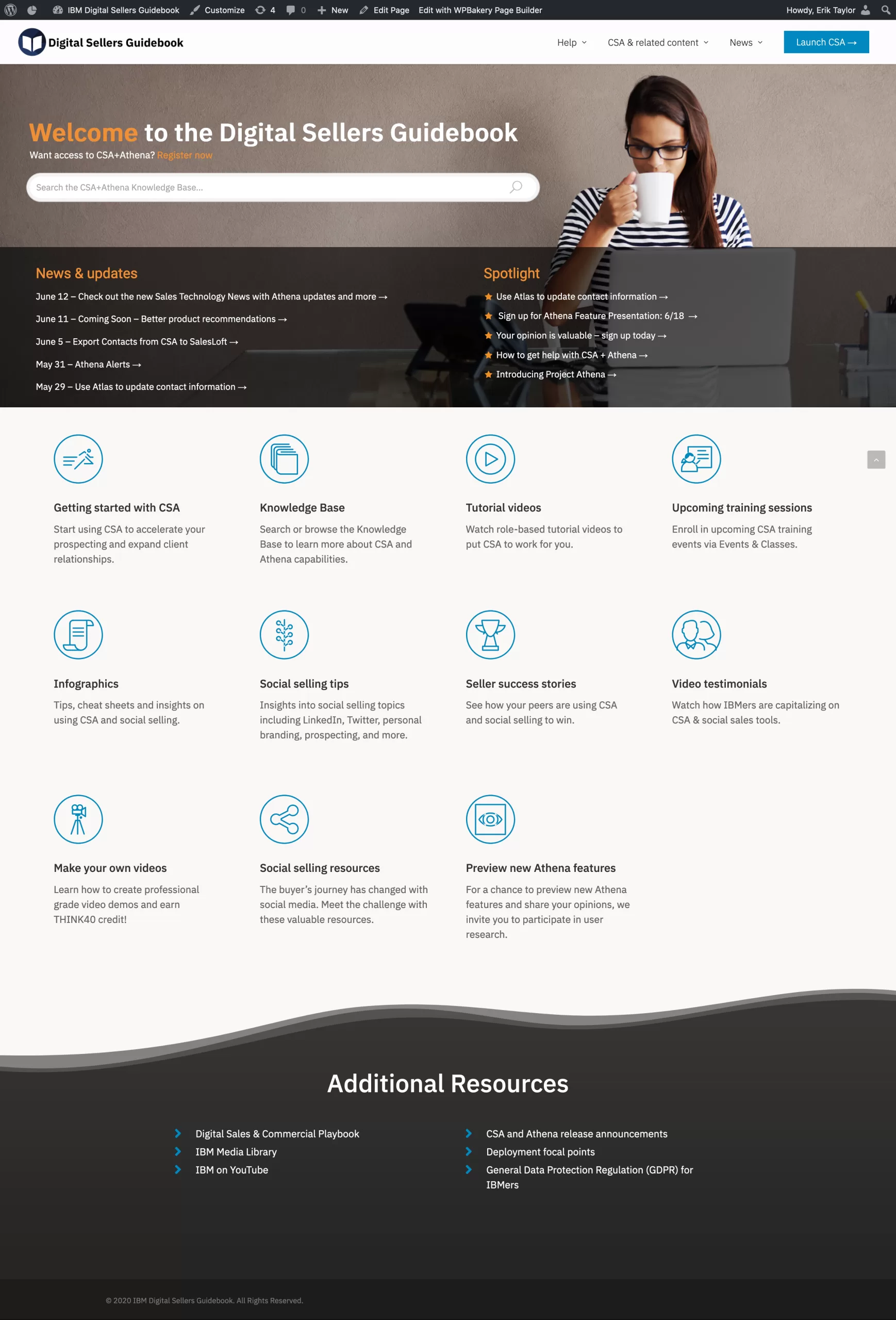
IBM’s Cognitive Sales Advisor platform was live, but sellers weren’t using it — they saw it as one more thing competing with time they needed for closing deals. The easy fix would have been more training sessions or a mandate from leadership. I made a different call: build a centralized guidebook on WordPress that met sellers and managers where they already worked, rather than asking them to adopt a new tool on top of a tool they were already resisting.
Success Metrics
- Increased platform adoption: A noticeable uptick in Cognitive Sales Advisor usage among both managers and sellers.
- Executive recognition: The guidebook was praised as IBM’s most comprehensive internal resource for sellers.
- Sustained engagement: Content expansion supported new initiatives and adapted to evolving user needs.
The Problem
Sellers viewed the platform as overhead, not help. Managers had incentive to push adoption but no real way to demonstrate value in the time sellers had available. The actual constraint wasn’t awareness — it was that every existing solution added cognitive load instead of removing it. Any fix that asked sellers to learn something new, in a new place, was going to fail the same way the platform itself had.
Key Decisions
User-Centered Approach
- What I did: Brought sellers and managers directly into the design process instead of designing from assumptions about their workflow.
- Why it mattered: Stakeholder interviews surfaced the real blockers — high cognitive load and no time for training — that wouldn’t have shown up in a requirements doc.
- Tradeoff: Slower start than building from existing specs, but it meant the guidebook solved the problem sellers actually had, not the one that looked obvious from outside.
Tool Familiarity
- What I did: Built the guidebook on WordPress rather than a purpose-built platform.
- Why it mattered: WordPress integrated cleanly with tools IBM sellers already used, so the guidebook didn’t ask anyone to learn new infrastructure.
- Tradeoff: Less flexibility than a custom build, but adoption mattered more than capability — a more powerful tool nobody opened would have been worse than a simpler one people actually used.
Centralized Information
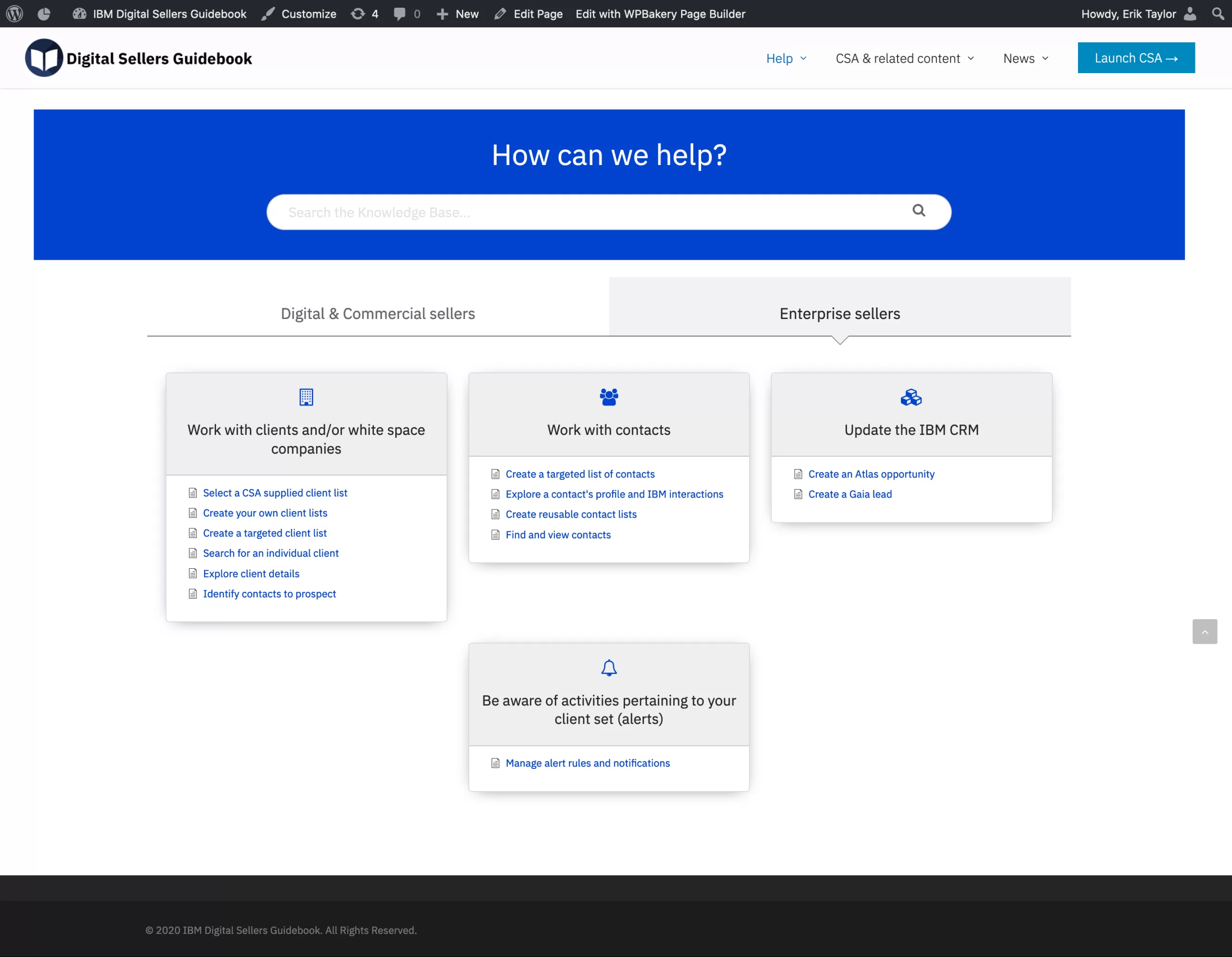
- What I did: Designed one entry point with strong search and segmented content (general users, enterprise sellers, other roles), instead of separate resources per team or product line.
- Why it mattered: Sellers had no time to figure out which of several resources applied to them. One searchable hub removed that decision entirely.
- Tradeoff: Centralizing meant taking on more upfront content architecture work, so the navigation and segmentation had to be right before launch — there was no easy way to course-correct structure later without disrupting a resource people had started to rely on.
Process
- Research and Analysis
To understand the barriers to platform adoption, I conducted stakeholder interviews with sellers and managers. These sessions revealed key pain points: high cognitive load, limited time for training, and a lack of clear, accessible resources. I also analyzed existing workflows and tools to identify opportunities for integration. - Content Strategy
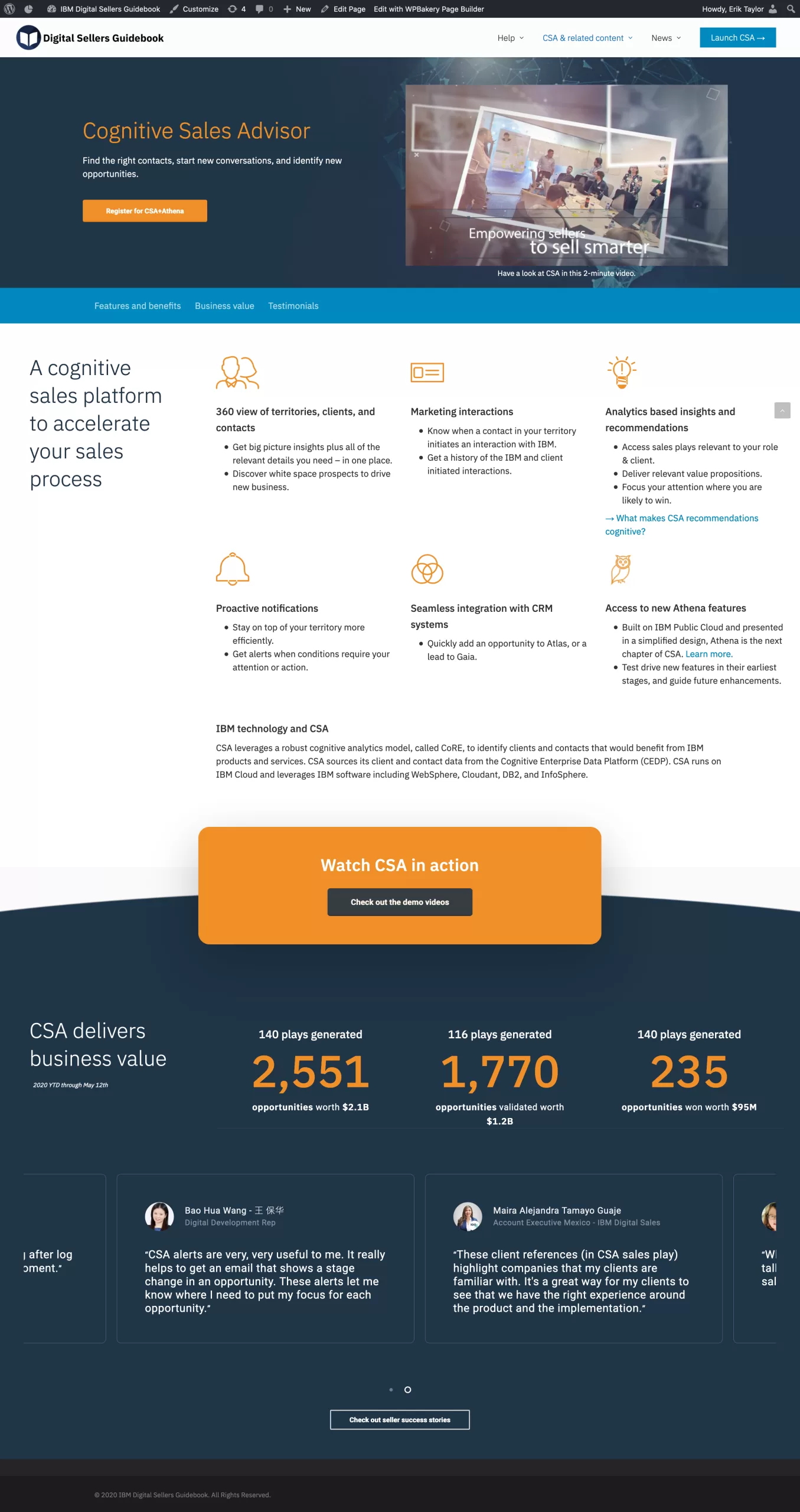
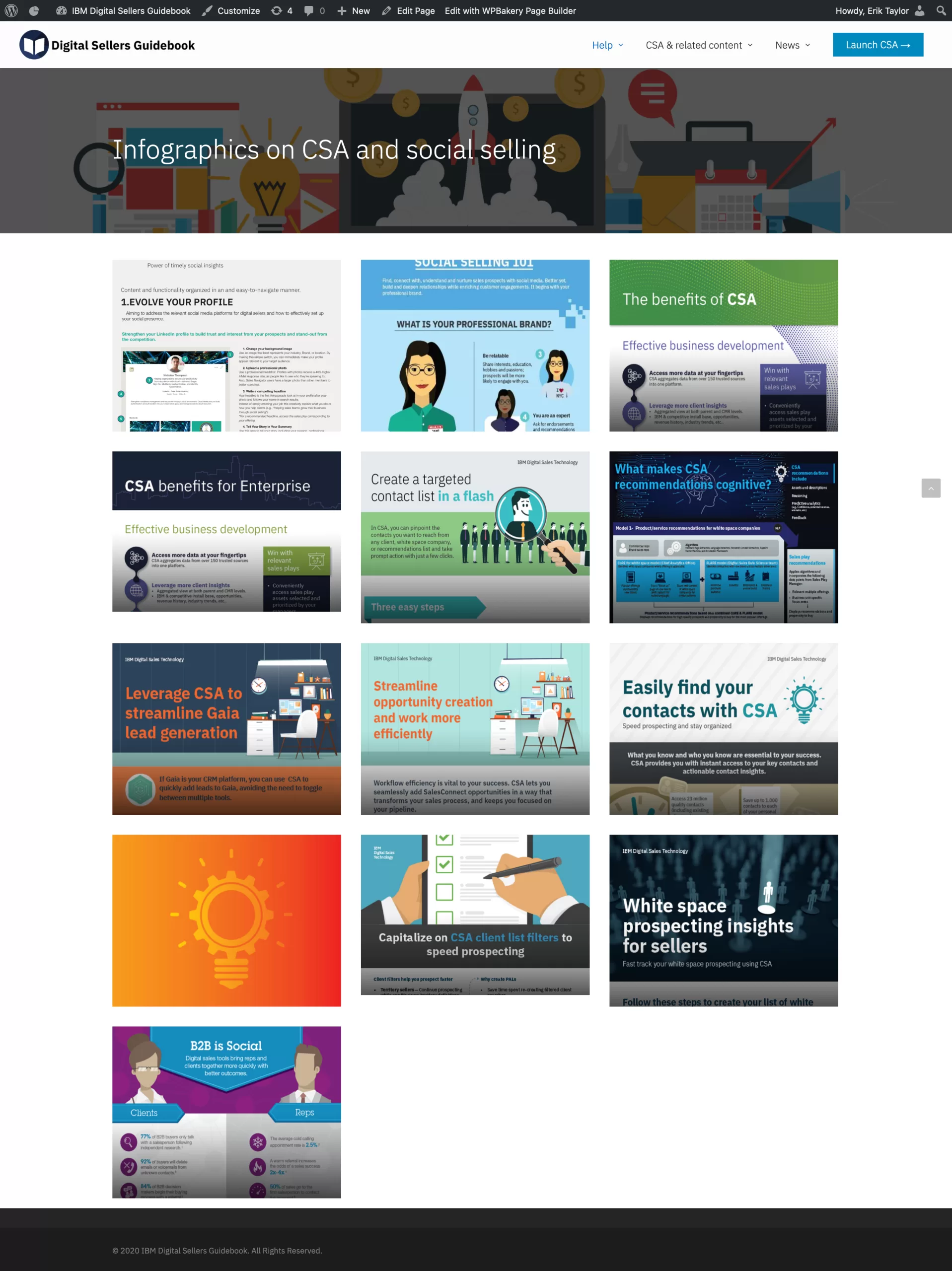
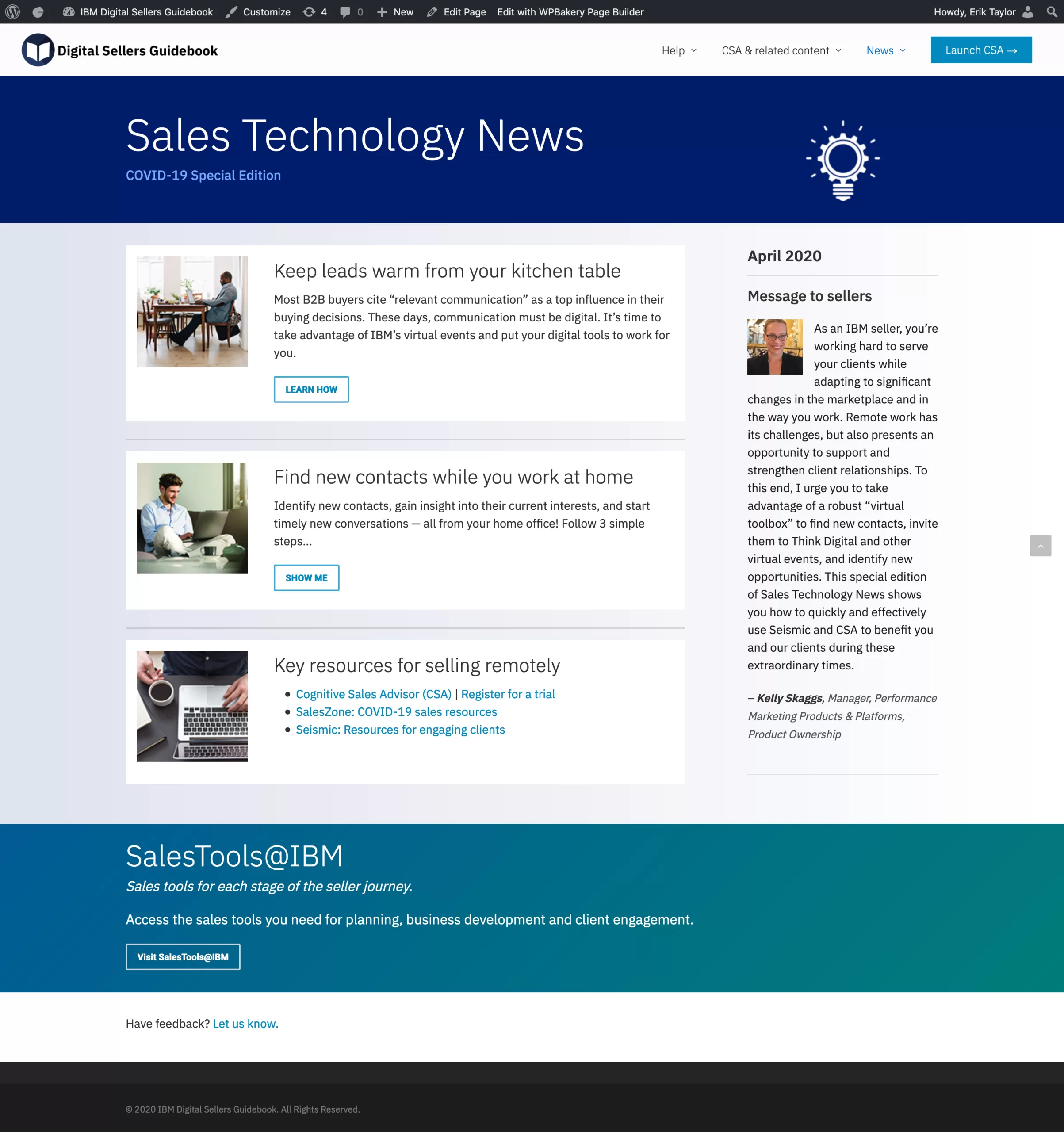
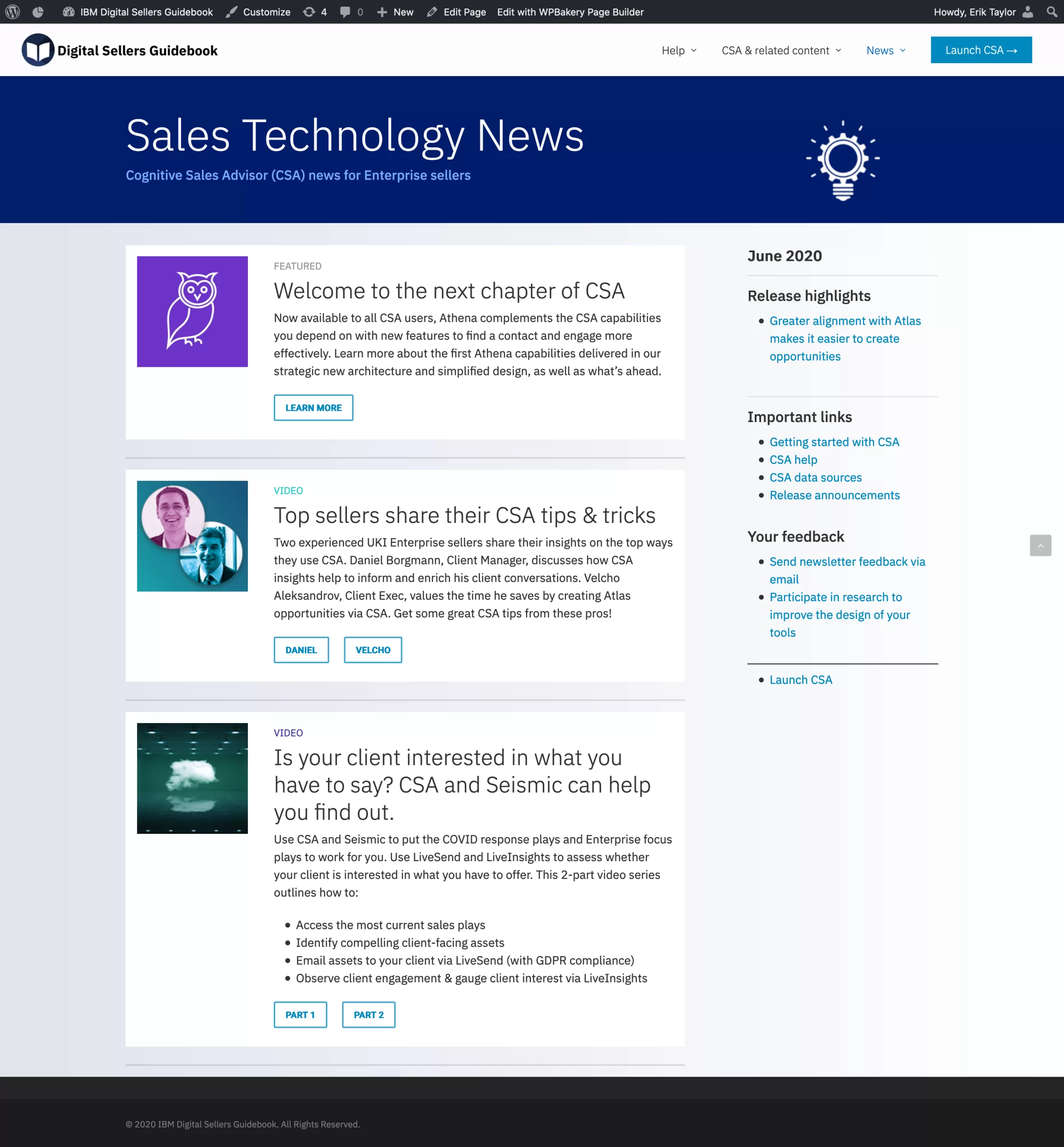
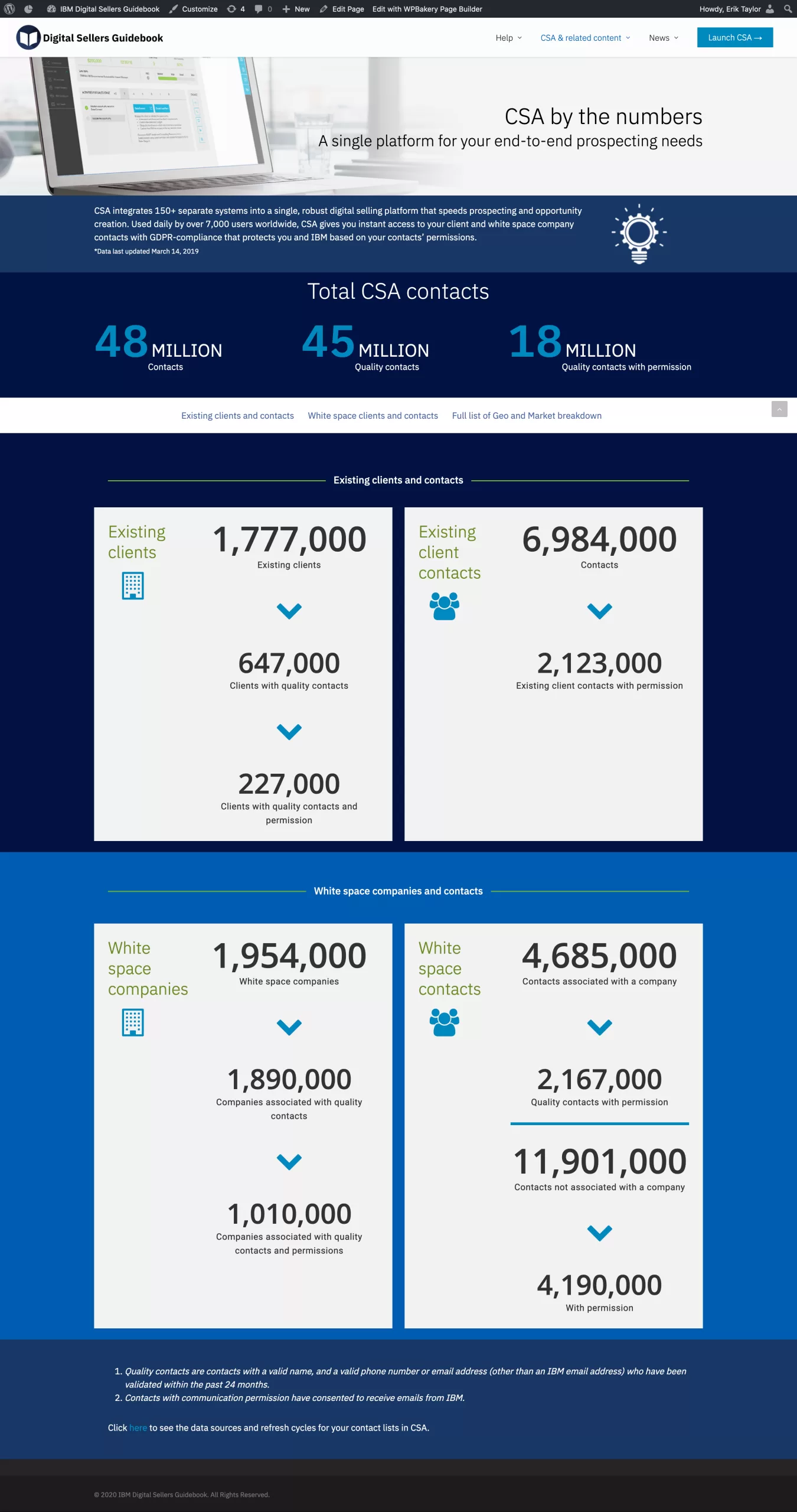
Based on the research, I developed a content strategy that prioritized user needs. This included:- Product Pages: Detailed overviews of features, benefits, and seller testimonials to quickly convey value.
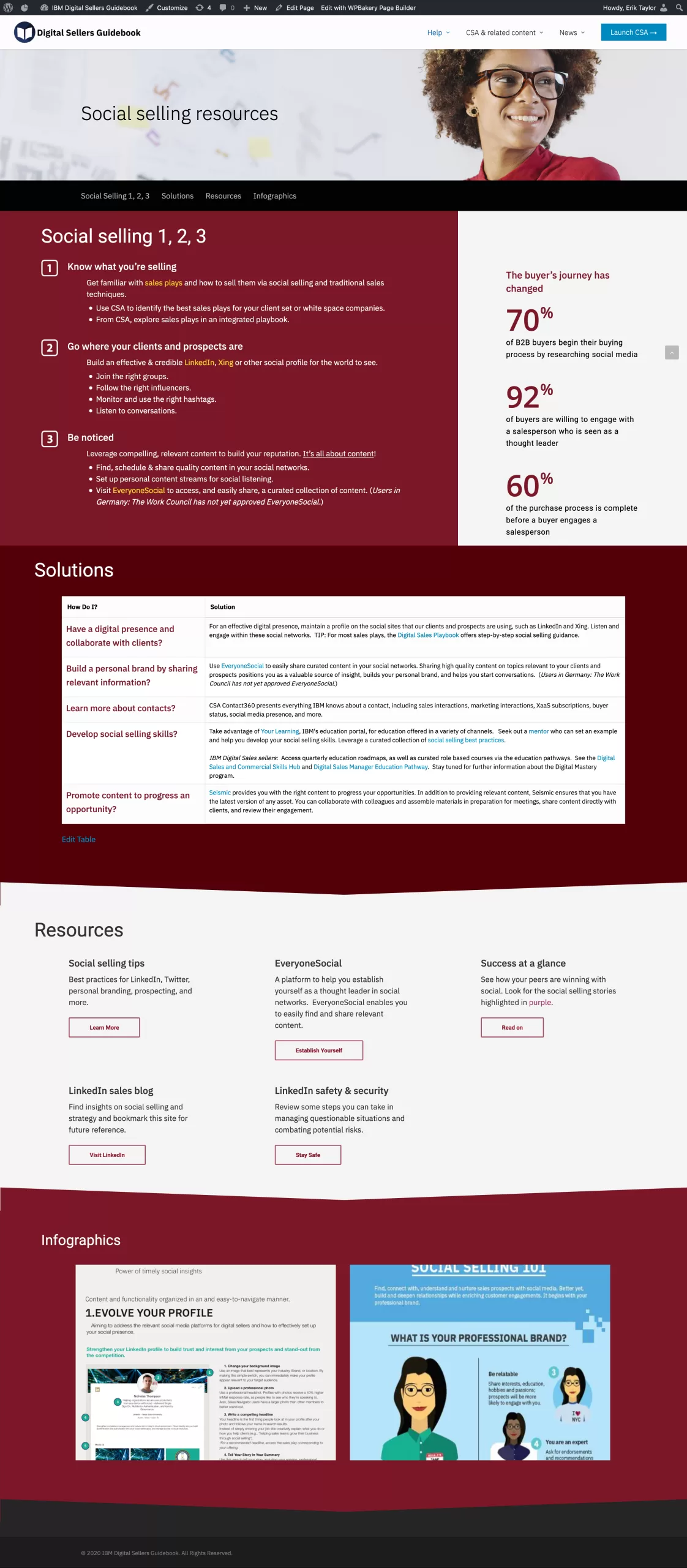
- Knowledge Base: Segmented articles tailored to general users, enterprise sellers, and other specific roles.
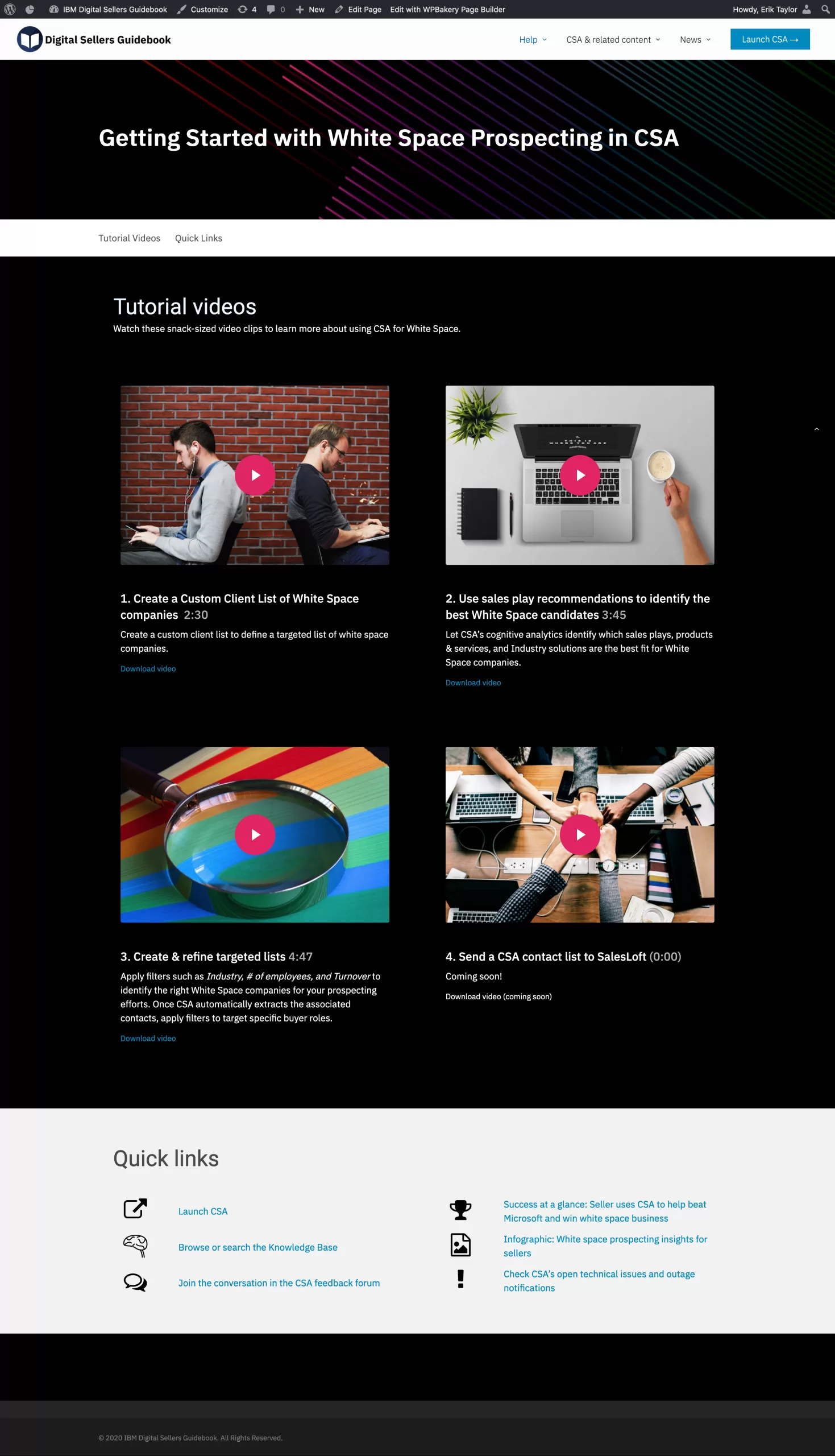
- Video Library: Organized recordings of training sessions and meetings, searchable by user goals.
- Prototyping and Testing
Using wireframes and interactive prototypes, I tested the guidebook’s usability with key user groups. Feedback from these sessions informed improvements in navigation, content layout, and search functionality. - Development and Launch
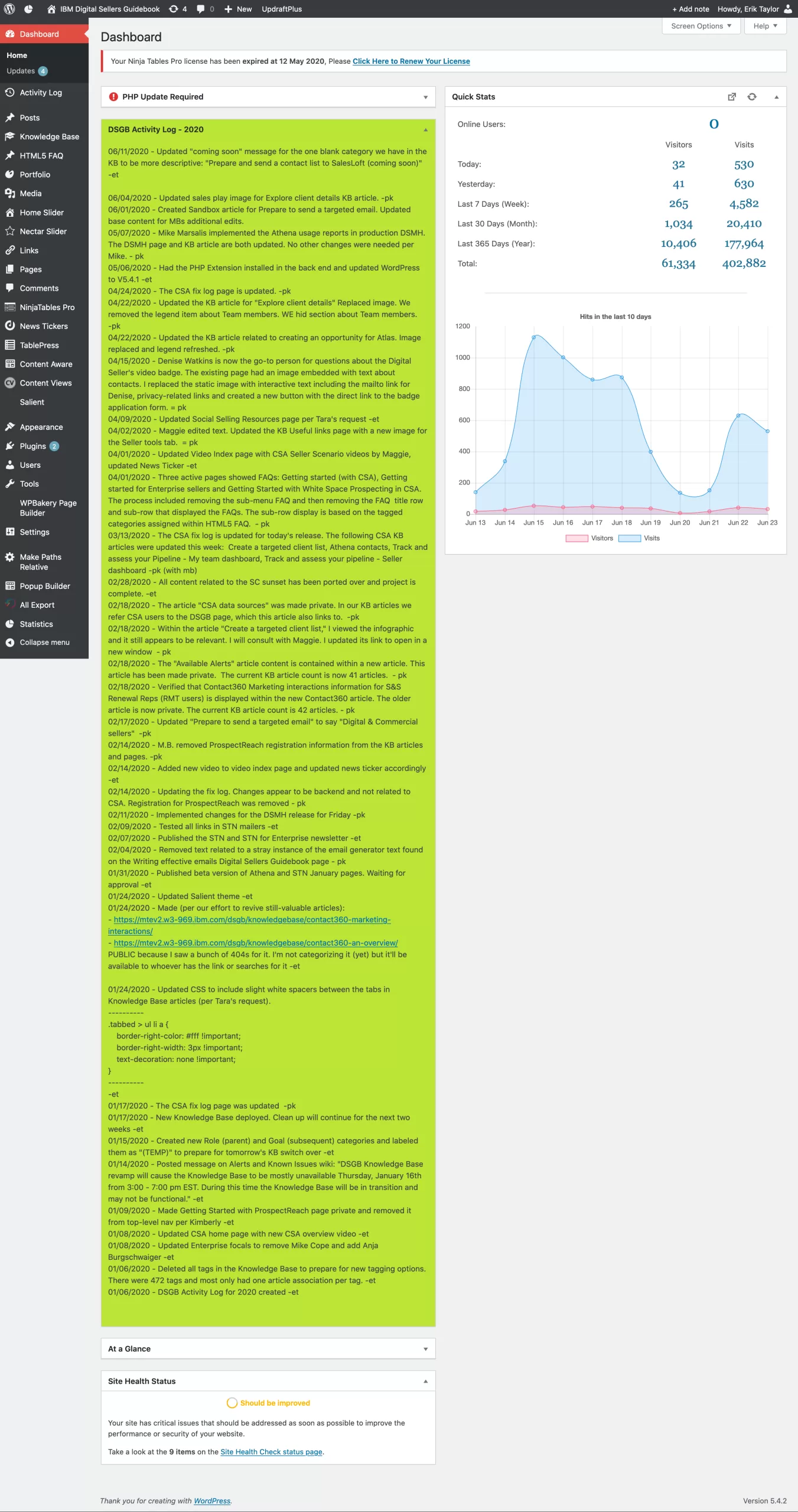
I collaborated with developers to build the guidebook on WordPress, ensuring seamless integration with existing IBM tools. After thorough QA testing, the guidebook was launched as a centralized resource for sellers and managers. - Iterative Updates
Post-launch, I continued to gather feedback and expand the guidebook’s content to support new initiatives and adapt to evolving user needs. This iterative process ensured the guidebook remained relevant and effective over time.
Learnings
- The Importance of User Involvement
Engaging users early in the design process provided invaluable insights into their pain points and needs. By including sellers and managers in interviews and testing sessions, we were able to design a solution that genuinely resonated with them, driving adoption and satisfaction. - Cognitive Load Matters
Simplifying workflows and reducing the cognitive burden were critical to the guidebook’s success. Sellers and managers were more willing to adopt the platform when it felt intuitive and didn’t interrupt their primary focus: closing deals. - Iterative Design is Key
The iterative approach—building prototypes, gathering feedback, and making improvements—ensured the guidebook addressed real-world challenges. Continuous feedback loops enabled us to fine-tune features and keep the resource relevant post-launch. - Effective Content Strategy Drives Engagement
Providing tailored content, organized for different user roles and needs, significantly improved usability and engagement. A one-size-fits-all approach would not have worked in such a diverse user environment. - Collaboration Enhances Outcomes
Working closely with cross-functional teams, including developers and stakeholders, allowed for seamless implementation and alignment with business objectives. This collaboration ensured the guidebook met both user and organizational needs.
These learnings have strengthened my approach to user-centered design and reinforced my commitment to creating solutions that balance user needs with business goals.
Final Thoughts and Impact
The core decision underneath this project was resisting the instinct to add more training or more push from managers, and instead removing friction from the tool itself. That meant treating cognitive load as the real constraint, not adoption numbers. The guidebook worked because it asked less of sellers, not because it offered more content — and that’s the tradeoff I’d point to first if someone asked what actually moved the needle here.